The Girl Who Wanted to Fly
I was born in Guatemala in 1967, the daughter of an Italian mother and a Guatemalan father. I came into the world within a complex family, shaped by strict rules, silences, and circumstances that for many years I did not know how to name.
I was the youngest of three siblings.
From a very early age, I understood that there were things left unspoken.
My parents kept us apart from much of social life because we were not legitimate children. Too young to understand adult conversations, yet never too young to feel their consequences.
I felt them.
There was something that had to be hidden. Something that set us apart from everyone else. Something that seemed to remind me that our existence belonged on the margins.
And that hurt.
It hurt deeply, though I learned very early on to hold that pain in silence.
Perhaps an essential part of my character began right there: in the need to observe, to understand what no one explained, and to find within myself a way to survive what I could not change.
I grew up in a fractured family, yet one full of life.
Restless, mischievous, curious, I struggled to sit still because my imagination was always somewhere else. While the adult world seemed built of rules and secrets, mine was brimming with possibilities.
I dreamed.
I dreamed endlessly.
My hero was Peter Pan.
I do not think that was a coincidence.
Peter Pan could do the one thing I desired most: fly.
I wanted to fly, too.
To rise above what I could not understand, to discover other places, other people, other ways of living. To find out what lay beyond my house, beyond Guatemala, beyond that small universe that was then my entire reality.
I can still see myself on those nights.
I would walk up to the window and press my face against the cold glass.
Outside was the moon.
I would look at it and begin moving from side to side. Then something wonderful happened: the moon moved with me.
If I stepped forward, it followed.
If I changed direction, it did too.
I was convinced the moon was following me.
Out of everyone in the world, it had chosen me.
That thought made me feel special.
In a life where I often felt hidden away, there was something vast and luminous in the sky that seemed to say the opposite:
“I see you.”
Perhaps that is why I never forgot that moon.
It was a silent complicity between the universe and me.
From early childhood I thought:
“Someday I want to become a great woman.”
I did not know what those words meant.
What was a great woman?
I had no answer.
I did not know if it meant being important, independent, intelligent, admired, or simply free.
I only knew that I wanted to grow up and become someone.
There was a strength inside me that was hard to explain—the sense that the world was far larger than what I could see from that window, and that somehow, one day, I would have to set out to discover it.
My parents often repeated:
“Dream, because no one can ever take your dreams away.”
That phrase stayed inside me.
Yet they left out something essential.
They did not tell me that dreams must also be pursued.
That they are built.
That a little girl can spend years imagining a life and, without realizing it, begin walking toward it.
I had to discover that on my own.
From childhood, certain words held a special meaning for me:
Justice.
Love.
Learning.
Growing.
Justice troubled me. When a child senses that something is not right, even without being able to explain it, she develops a keen sensitivity toward fairness and injustice.
I observed a great deal.
I also wanted to learn to speak well. Beautiful words fascinated me—the way certain people pronounced them, the tone of a voice, the elegance of an idea.
I watched television and listened closely.
Whenever a word struck me as lovely, I repeated it silently.
Once.
Again.
I imitated its sound, its rhythm.
I wanted to speak the way I imagined a lady spoke.
It was my secret school.
No one taught it to me.
I simply did it.
And inside that little girl grew another certainty: I wanted to speak of lovely things.
Not because I was unfamiliar with sadness.
I knew sadness all too well.
Precisely for that reason, I sought out beauty.
Over time I discovered another tool: a smile.
I learned that it could open paths.
Bring people closer, soften hard moments, unlock doors that seemed shut tight.
That smile stayed with me always.
Yet behind it lay a story.
My childhood was not easy.
At home, they called me “la negrita.”
I hated that nickname.
It made me feel different, less visible. And a small word can grow enormous in childhood.
So I looked for another way to exist.
If not through beauty, then through warmth.
Through personality.
Through the way I reached out to others.
Through a smile.
Without knowing it, I was learning one of life’s earliest lessons: what we believe we lack can compel us to discover what we truly possess.
I had curiosity.
Imagination.
Character.
An immense need to love and be loved.
And that smile.
There was sadness, too.
A great deal of it.
Tears held back in silence, questions without answers.
Today I understand that those tears did something within me.
They softened my heart.
They made me sensitive to the pain of others.
They taught me to observe.
To understand that behind every smile there may live an unseen story.
And right there, unknowingly, my way of looking at the world began to take shape.
For years I thought I had merely been a restless child who dreamed too much.
Now I know that imagination was freedom.
When reality felt small, I imagined.
When it hurt, I invented.
When I felt hidden, I looked at the moon.
When I did not feel enough, I smiled.
When words were missing, I searched for them.
And when I could not yet travel, I flew.
With Peter Pan.
With the moon.
Toward places I did not know, toward lives that did not yet exist.
Many years later I realized that desire never faded away.
It only changed form.
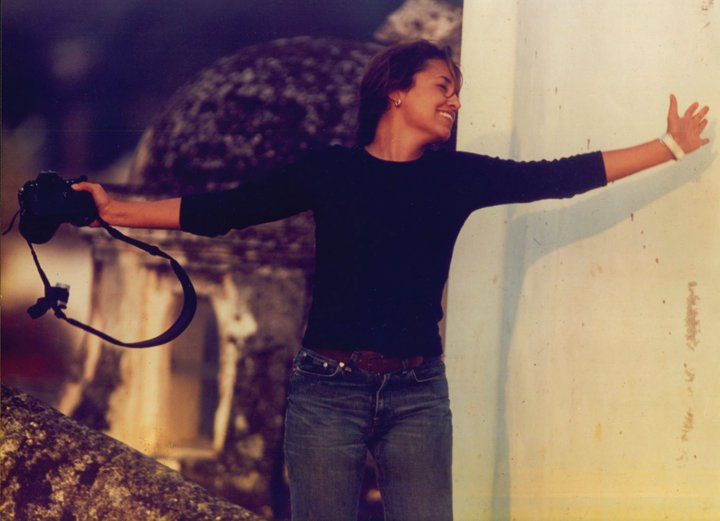
The little girl at the window grew up.
She stepped out into the world.
She learned.
She made mistakes.
She loved.
She wept.
She traveled.
She opened doors.
And she kept searching for beauty even where none seemed to exist.
Perhaps becoming a great woman never meant becoming important.
Perhaps it meant something far harder:
Daring to live.
And whenever I return to that room, I still see her.
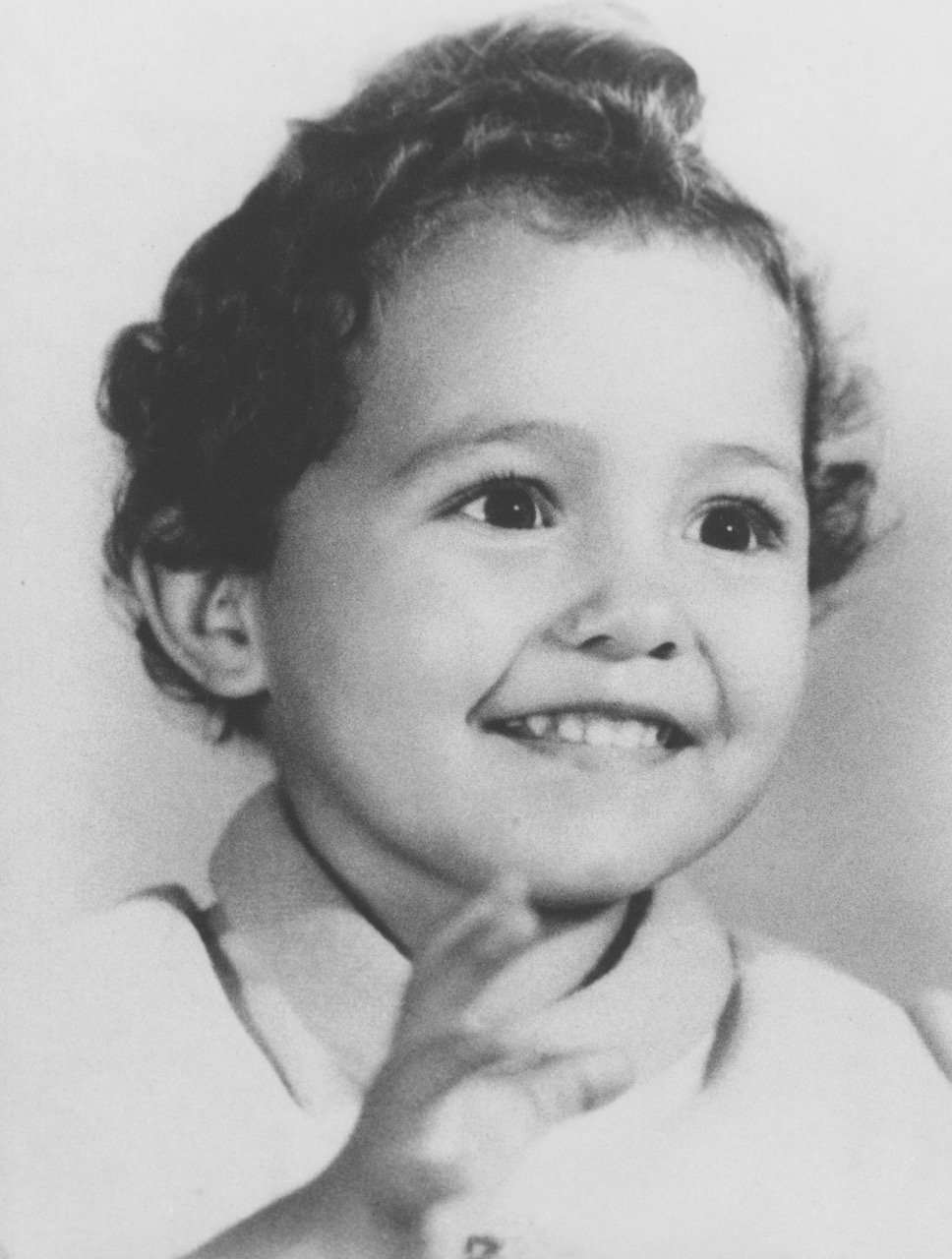
A little girl standing by the window.
Her face pressed to the cold glass.
Her gaze fixed on the sky.
And the moon following her.
She does not yet know where she will go.
She does not yet know who she will become.
She knows only one thing:
One day, she is going to fly.